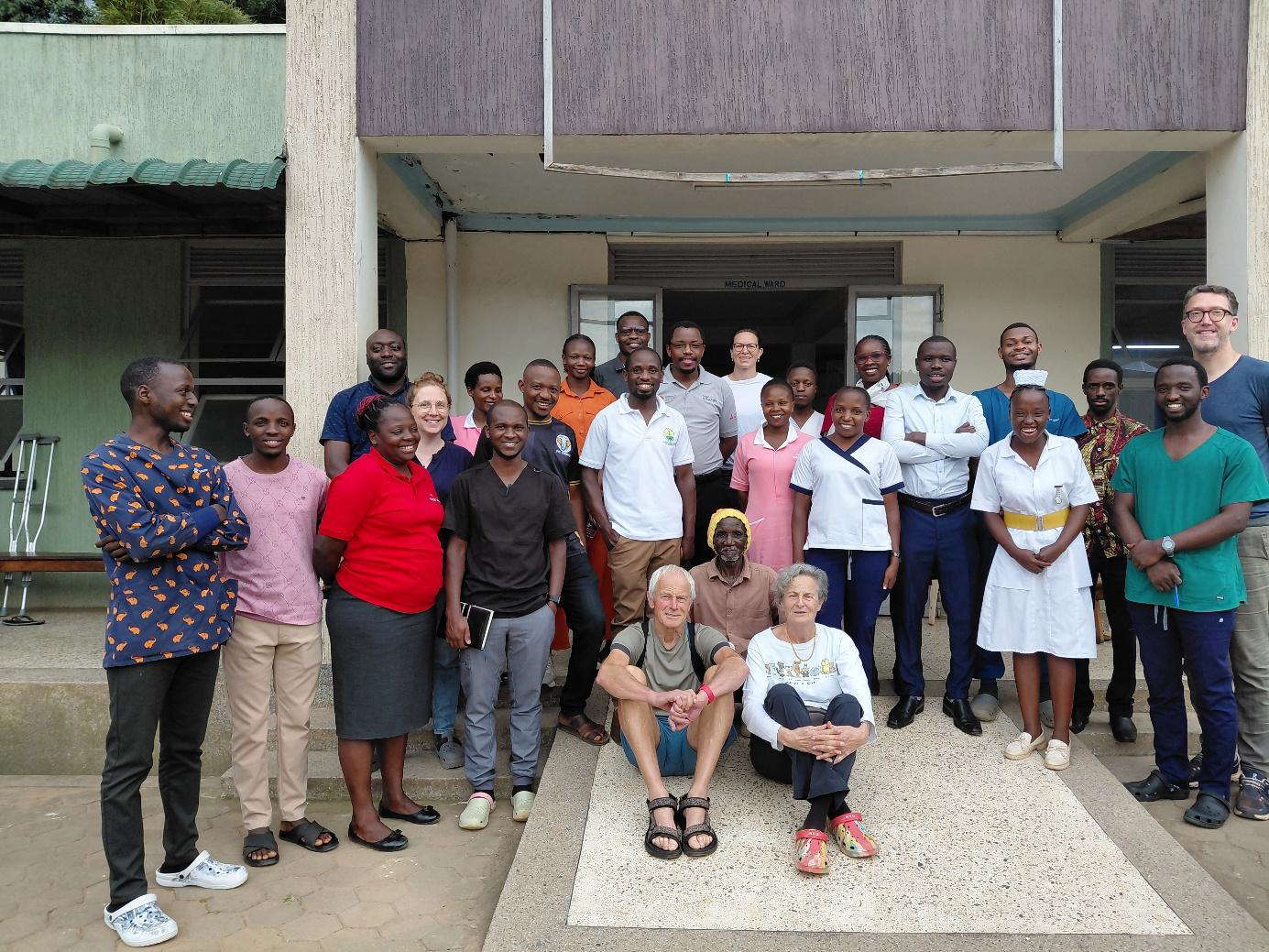
Report on orthopaedic mission 2025
Once again, the adventure began with a major setback: Dr. Inès Raabe was denied check-in because her visa had a passport number that was considered incorrect, even though it was correct because the number exists on her passport… with two extra digits! As a matter of urgency, a new visa had to be issued, the international flight and domestic flight had to be changed, as did the accommodation… This refusal is unacceptable and Brussels Airlines has still not responded to my requests for an explanation!

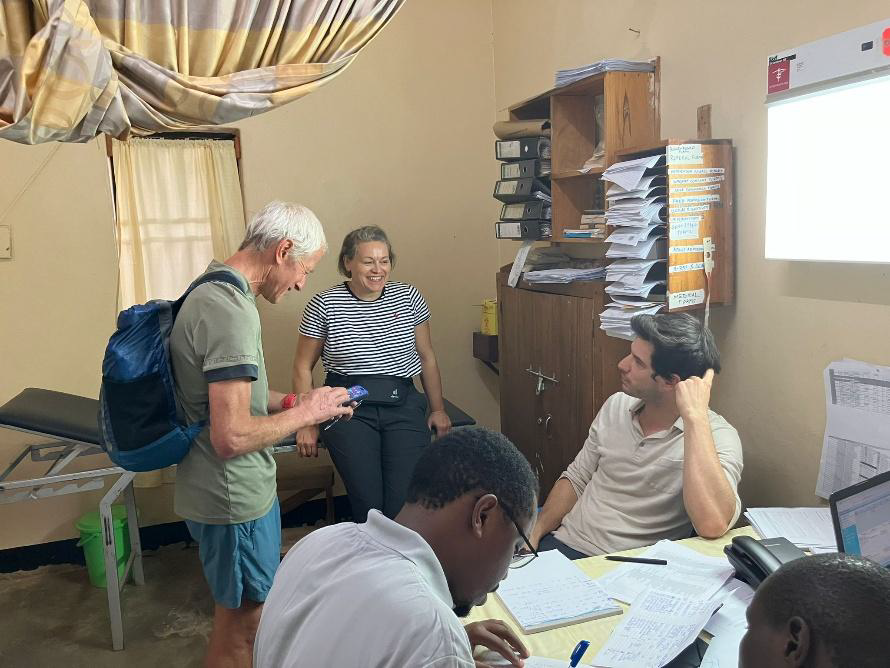
Dr Daniel Estoppey and Dr Veronique Erard travelled alone and started the camp without the expertise of our paediatric orthopaedic surgeon! But she arrived two days later!
This camp consisted of two groups that overlapped over three weeks.
The first group, consisting of Inès, Véronique, Daniel and Marie Jordan, the occupational therapist, finally got together, albeit two days later than planned.
They set up the orthopaedic camp, began consultations and operations in their areas of expertise, and thus prepared for the arrival of the second group, for whom this mission was a first: Anna and Michael Hirschmann, a radiologist specialised in osteoarticular conditions and an orthopaedic surgeon specialised in the lower limbs, particularly the knee.
187 patients attended the initial consultation for triage prior to their enrolment in the camp, and 116 patients were seen during the mission, including many emergency cases involving accidents. The organisation was excellent, as patient appointments were scheduled according to the arrival of the surgeons by speciality, as requested.
The success of these camps is not only due to the reputation of the ‘foreign’ surgeons, but also to the fact that the financial contribution required from patients is minimal compared to the actual cost of an operation (for insured patients – £5/year – the amount is £40, and for others, £75). Many patients wait for these opportunities and arrive so late that their cases are inoperable….
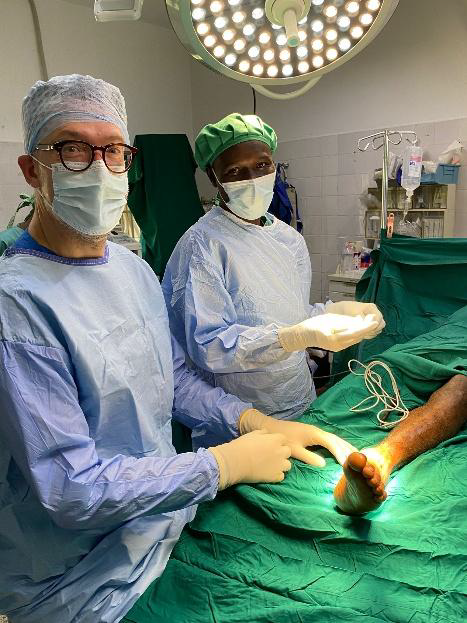
There were 51 operations on 46 patients.
In addition to teamwork, Daniel took care of injuries affecting the upper limbs – but not only – and Inès complemented this with the lower limbs and children as a priority.
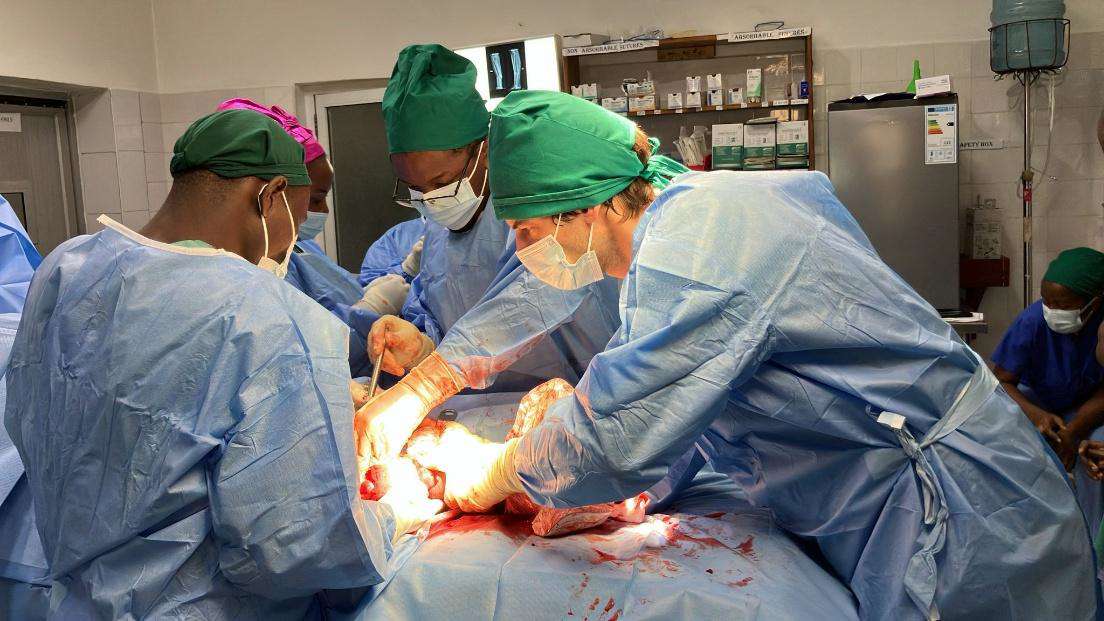
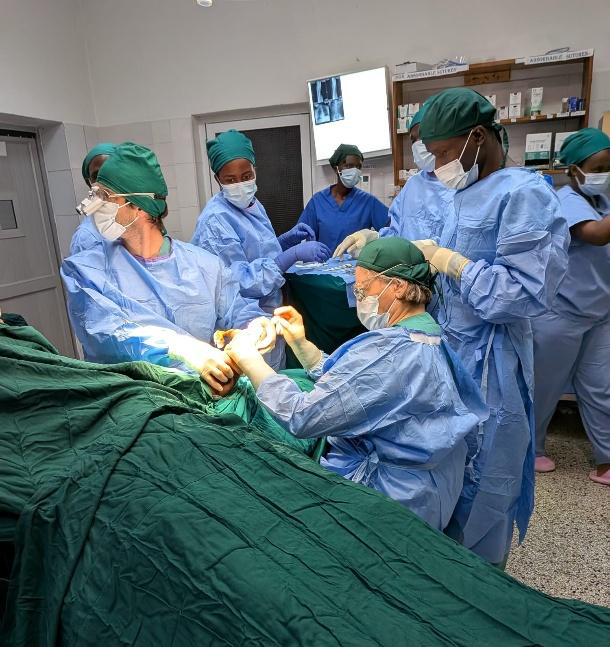
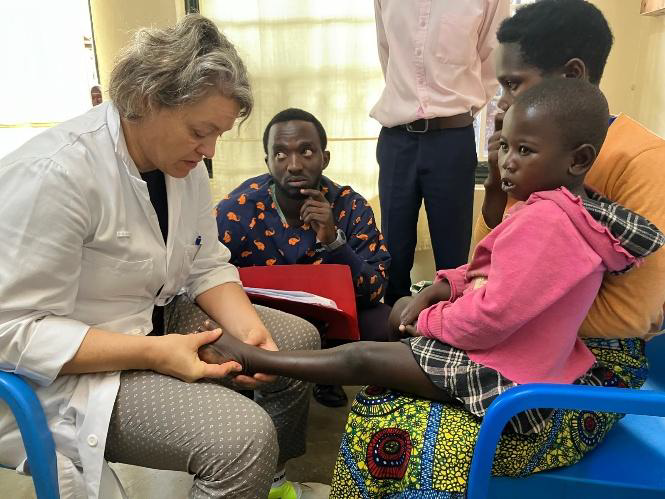
Véronique kept the consultation register for the first two weeks and took on the immense, ongoing task of all infectious diseases, including chronic osteomyelitis, which remains a particularly difficult challenge.
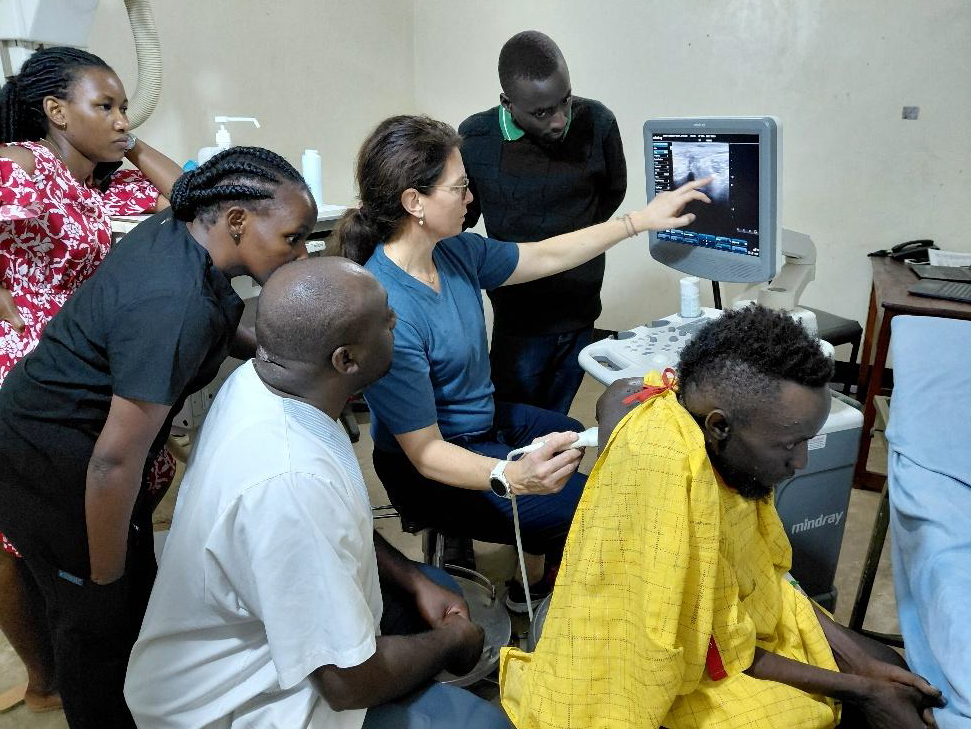
As for the second group, we benefited from their expertise in lower limb orthopaedics, as femoral fractures increased towards the end of the stay, and in radiology, where Anna helped diagnose certain difficult cases and performed ultrasound-guided injections.
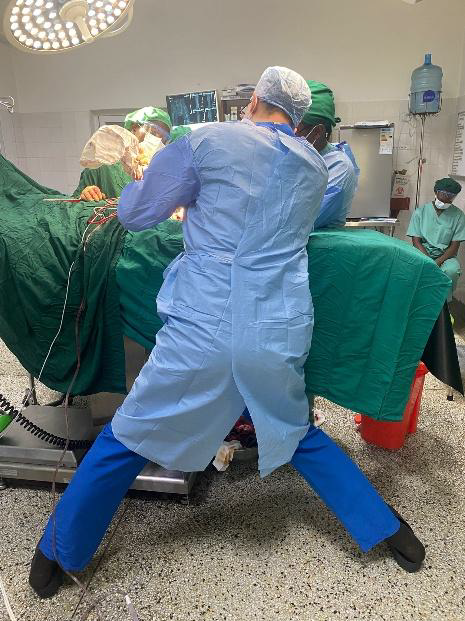
Michael, who is not small, had some difficulty adapting to the operating theatre with an operating table that was too low!
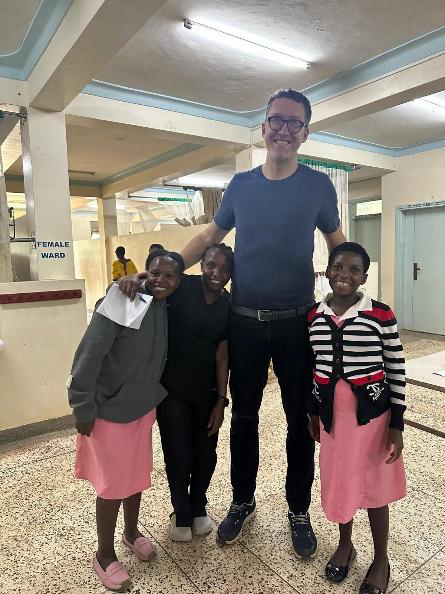
Here with nurses and, on his right, Dianah the physiotherapist, who is not Batwa (Pygmy)!
Around forty patients were prescribed physiotherapy from the outset. Around fifty more were added for post-operative care, not counting the patients who come for outpatient consultations with the physiotherapist.
Dianah is alone and is studying for a bachelor’s degree – which we sponsor – attending classes at weekends and returning to work on Mondays. She is overwhelmed with requests and also cares for disabled people, including many children with cerebral palsy. Her working conditions are difficult. She sees patients in a container that is difficult to access for wheelchair users or people with walking sticks because it is located on rough ground with no marked path.
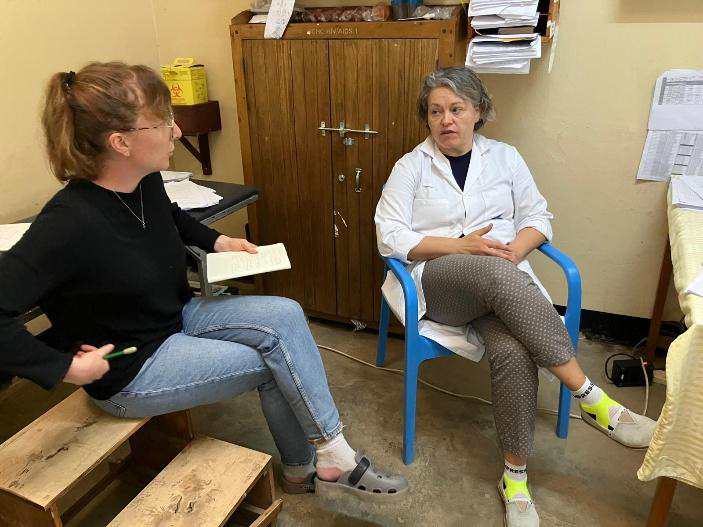
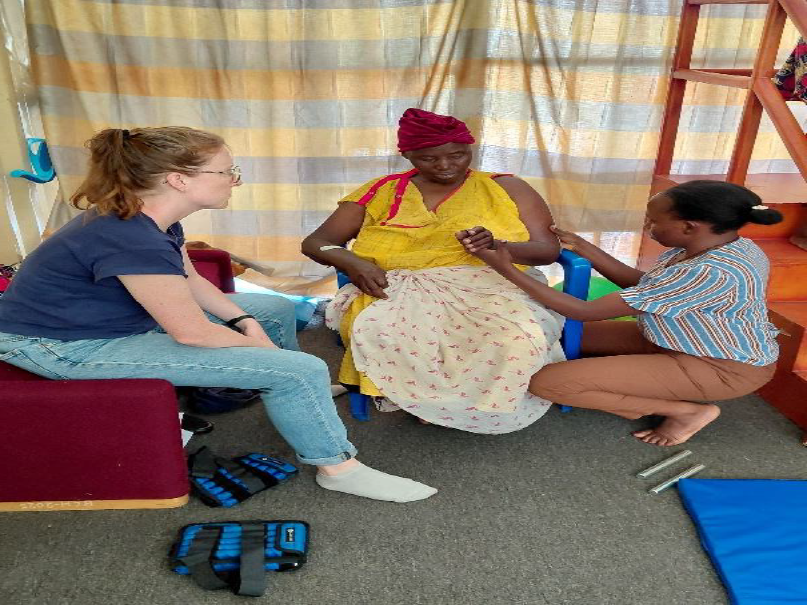
She particularly appreciated the collaboration of Marie, who, as an occupational therapist, is brimming with practical ideas for dealing with disabilities.
A request for funding is currently underway to improve working conditions and, above all, to provide access to prosthetics and orthotics for disabled or amputee children.
We had a case involving Victor, aged 10, who came to us with such a severe infection in his leg, which was fractured in several places, that the only solution was amputation… We need to be able to help him with a prosthesis! And he will grow… He will need follow-up care!
The laboratory was called upon to monitor microbiology results and prescribe the most effective antibiotics available, as recommended by Véronique . Today, she is still in contact with the local team via WhatsApp to monitor treatments.
Whatsapp du 12 décembre : TO ASAPH and JUDE . Is the patient still on amoxicillin or amoxy clav if yes stop it . Replace it with doxycycline 2×100 mg/j until we have a definitive identification.
De Numerous X-rays were necessary for diagnosis and post-operative follow-up. We were visited by Herman, a specialist in PACS and AI, to help improve image transfer conditions. The aim is to find a solution that would avoid printing X-rays, as the films are very expensive.
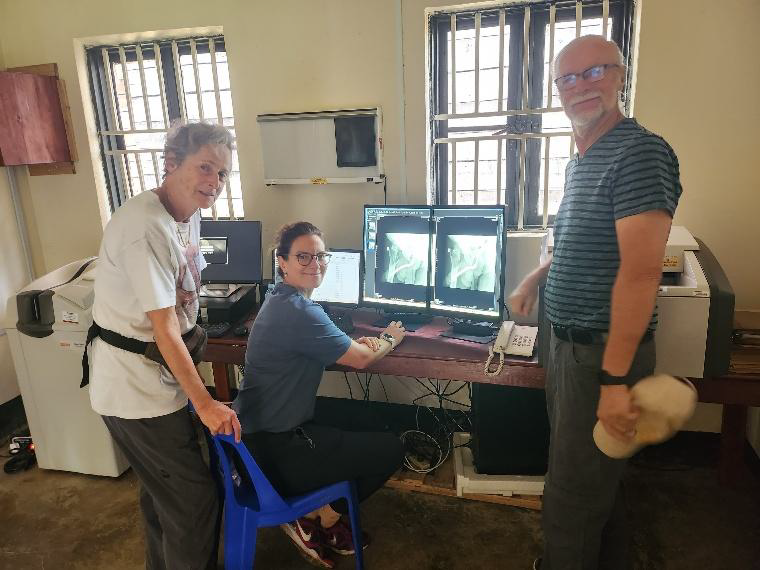
Philippe Besson, who joined us with his daughter Thymea, was in high demand as usual! He helped set up the radiology archiving software – which Herman had trouble configuring – and supervised the installation of the dental radiology equipment.
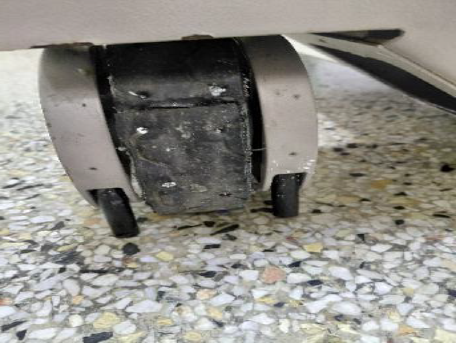
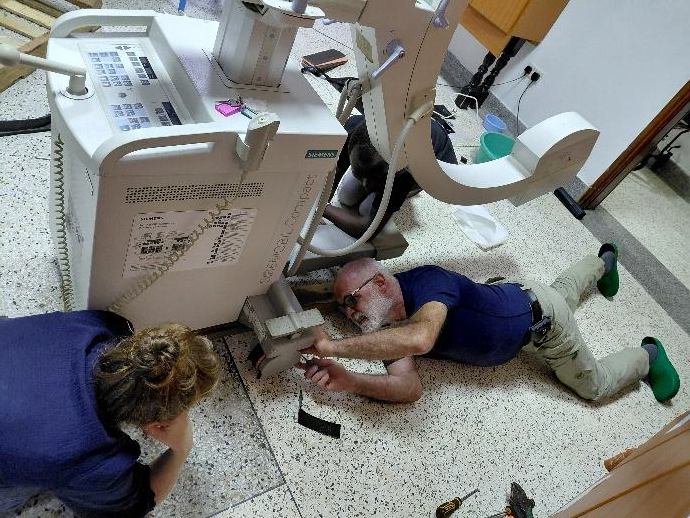
At 11 o’…clock at night, he was still repairing the tyres of the C-Arc , which was no longer mobile. He replaced the rubber as best he could with material which was no longer needed for making splints in occupational therapy. Thank you Marie !
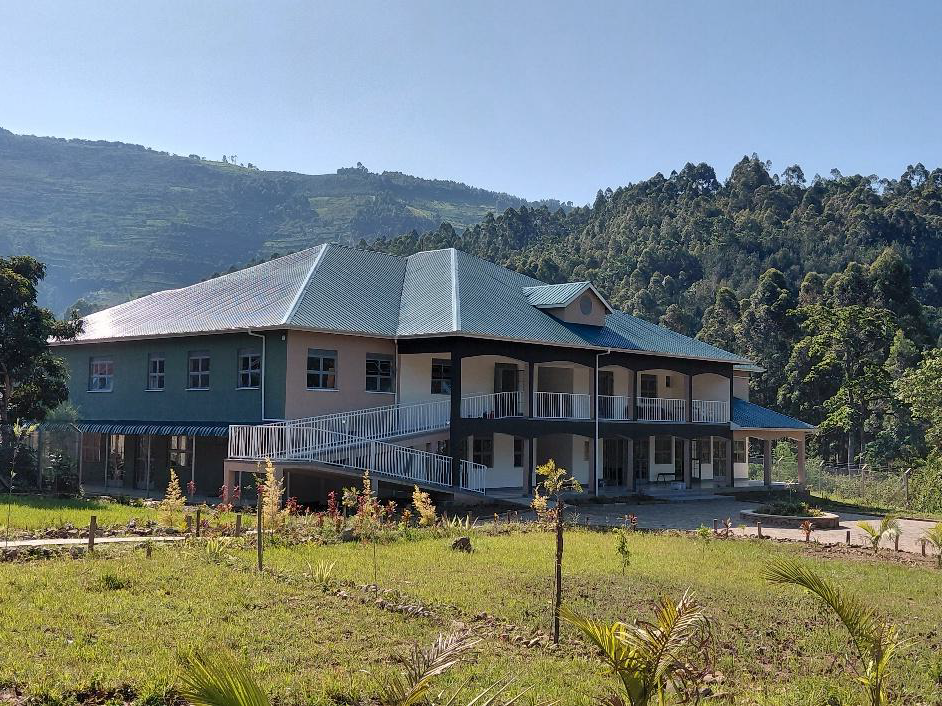
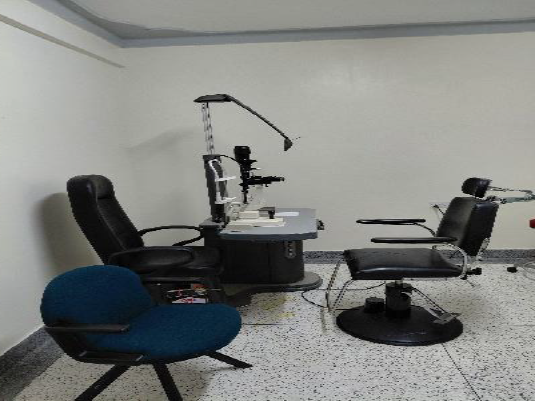
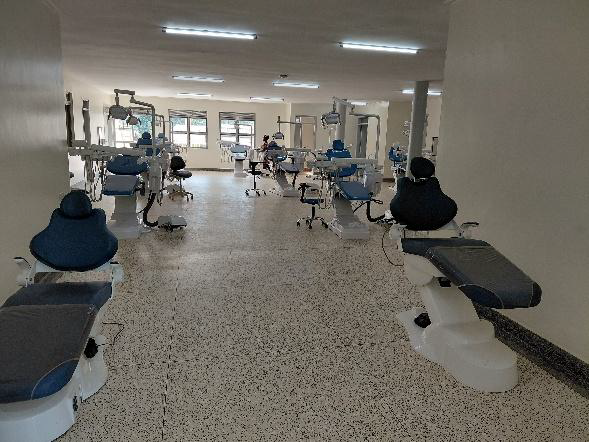
The hospital now has a magnificent building for dentistry and ophthalmology… with equipment provided by, among others, a Chinese association… who thought very, very big.!!!!!
And Thymea ? she was able to take advantage of her stay to go gorilla tracking.
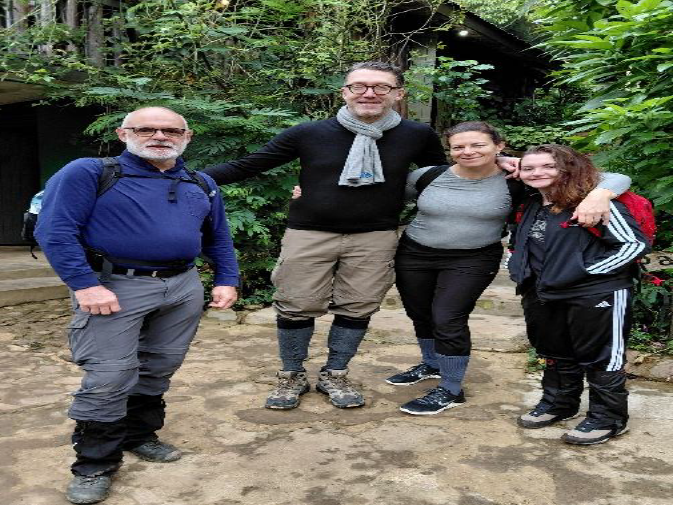
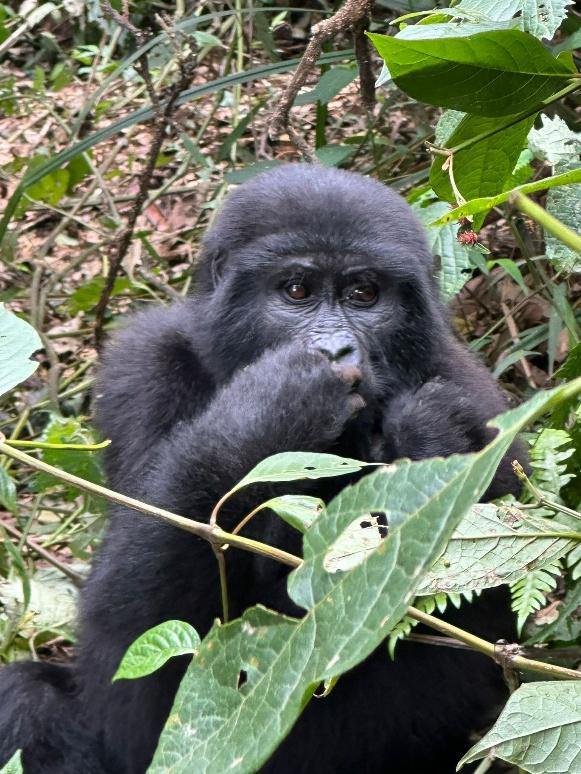
and to participate in occupational therapy by imagining a seat for a patient whose spine is so twisted that he cannot sit upright.

And all the data had to be checked with Dickson, who replaced David in organising patient flow
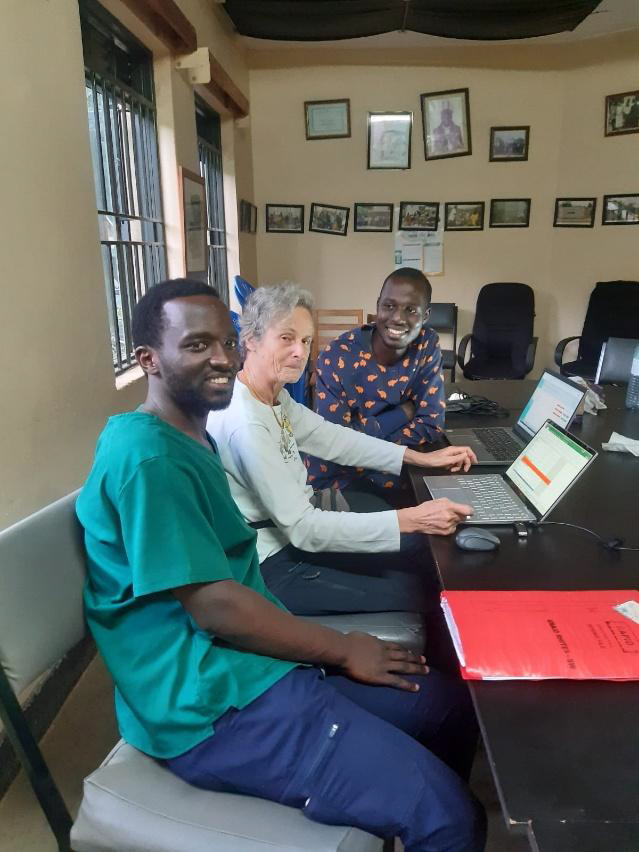
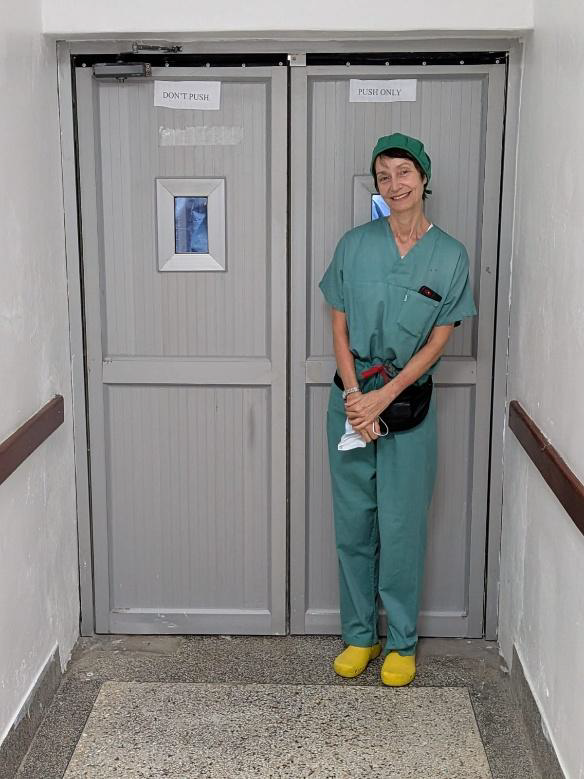
And of course, the picture of the end….